Do we have as planning process or is it quite simply an approval process?


"The only real voyage of discovery consists not in seeking new landscapes but in having new eyes."

Do we have as planning process or is it quite simply an approval process?
"The only real voyage of discovery consists not in seeking new landscapes but in having new eyes."
Opportunities such as this do not present themselves all that often. These 'buildings' are a part of Launceston's 'cultural landscape' and they are in the condition of changing or transforming into yet another manifestation of that 'landscape.'
There are values to be preserved, opportunities to be explored and heritage to be celebrated. Can Launcestonians stand by and allow 'market forces', fickle as they are, to dissolve into something less than what might be, what could be, possibly what should be?
There is time to start the discourse IF there is the will!
Soon that will be revealed!


 The documentation for the Draft Planning Scheme, as presented, contains a series of weaknesses and problems. This is demonstrated at the very beginning of the documentation in so much as it does not articulate a clear and unambiguous purpose – [1] • [2] • [3].
 For example, a fire bucket’s purpose is to contain and carry a substance – water, liquids, sand, etc. Given that it is fit for purpose it may fulfil an objective in, and play a part in, extinguishing a fire. However, arguably its purpose is something other than extinguishing fires even if it is made available to play a role in putting out a fire.
 It is not within the scope of this paper to explore every detail of the Draft Planning Scheme’s Objectives. Rather there are overarching issues within them that can be addressed in a general way and that arguably need attending to in order to enhance its effectiveness.
 Importantly, linked to each objective there is explanatory text that rationalises the objective and puts it into context. It would be helpful to readers if this text were to be headed ‘Context’ or ‘Rationale’ or something like ‘Guiding Principles’. This would add to the documents utility – and add substantially to its readibility.


 In a municipality like Launceston, scenic amenity should not be assessed exclusively from a distance and especially so given the city's history and heritage. Rather, the amenity needs to be examined from near quarters – a placescape, a streetscape, a precinct, a neighbourhood – as well as from a distance – a road, a tourism precinct, the CBD, Town Hall even. The Draft Planning Scheme tends to privilege the distant perspective – a Town Hall bureaucratic perspective. In the end, and as a consequence of this, the draft scheme is relatively careless about the cultural placescapes and landscapes these distant perspectives celebrate and include – and that the scheme might aim to protect, enhance and regulate.
 On face value the draft scheme is careless about this situation and seems to offer little in the way of mitigation when viewed from a cultural placescape cum cultural landscape perspective. Indeed, in the draft scheme a relatively minor anomaly on Trevallyn has arguably been translated into a more problematic and anomalous planning issue from a cultural placescape cum cultural landscape cum precinct amenity perspective. If this case exists so too will many others.
 In respect to the situation described above, an ‘explanation’ has been offered that the method used to determine the ‘borders’ of Scenic Management Areas is something described as a “Military Crest”. This concept may well have utility in determining military strategies but does it have any relevance to civic planning? Debatably it has little or no value in civic planning or civic planning strategies because there is no war/conflict to be won except for those generated by the planning scheme, rather there are cultural sensibilities to be accommodated and cultural placescape/landscapes [2] • [3] • [4] to be protected, preserved and celebrated.
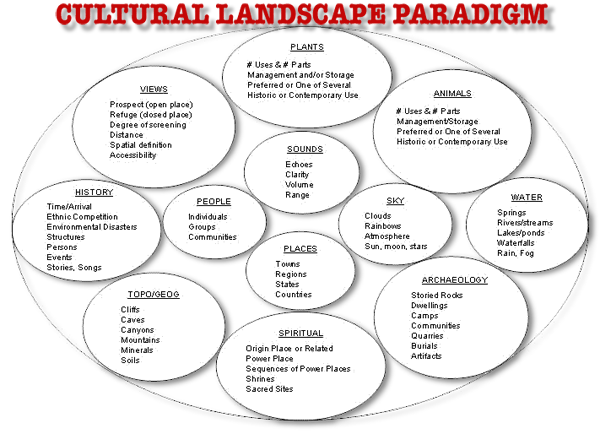 In Scenic Management the utility that it seems is being regulated, and protected, is aesthetically determined, and subjectively, and for the benefit of tourists – people who for the most part live elsewhere. The narrow ‘point of view’ from which scenic management is perceived needs to be reviewed to facilitate better strategically driven, culturally sensitive planning strategic outcomes. There is more at risk in these placescapes/landscapes than the risk of offending the aesthetic sensibilities of tourists or visitors to the city and thus the income possibilities of tourism operators bureaucratically determined for the benefit of stakeholders rather than the precinct determined Community of Ownership and Interest (COI).
 Communities of people have many items in which they share a sense of ownership - for example places, streets, roads, schools, neighbourhoods, a health service, even a landscape. Those with such an interest form the Community of Ownership and Interest – its COI – for those items.

 Typically, 'stakeholders' assert their rights when there is a contentious decision to be made. However, 'stakeholders' are rarely called upon to meet or acknowledge an obligation. Conversely, members of a COI will have innate or unexpressed understandings of the obligations that are expected of them and the rights they expect to enjoy – indeed, there is very likely to be stakeholders in the COI mix.
 and Interest are arguably inadequate – flawed and dysfunctional even.
 Given the pace of change anticipatable in the current socio-economic circumstances it would be more than ‘desirable’ if local government planning schemes started to look at alternative and unfolding development paradigms.

 Furthermore, there is a need to more actively engage with the Council's COI relative to both Social and Cultural Mapping issues.
 The accessibility of governance documentation of all kinds has increased exponentially in the parts decade. It can be increasingly assumed that members of a constituency have access to the Internet. Likewise, it is relatively safe to assume that members of ‘the public’ can access Council’s planning documentation online. It is even the case that increasingly this is the preferred method of accessing information relevant to governance issues.
 directories but so be it. Where this is inadequate more appropriate formats can be downloaded from the Councils website and printed in a growing number of businesses and/or at Council if need be.
 It is apparent that the city’s planning and approval processes are primarily designed to be administratively expedient. This does not always lead to equitable outcomes or indeed appropriate outcomes relevant to the maintenance of streetscapes, cultural placescapes and/or cultural landscapes a 'development' will have impacts upon.
 CLICK ON THE IMAGE TO ENLARGE


